Stretching across Vietnam’s lush landscape are fields that define not just the scenery, but the soul of the nation: rice paddies. Whether cascading down terraced hillsides in the northern highlands, or sprawling across the fertile deltas of the south, rice fields form a patchwork of green and gold, rippling with life and history. To understand Vietnam is to understand rice—not merely as a crop, but as a cultural keystone that feeds the body, sustains the spirit, and nurtures the land.
History of Rice Cultivation
Legend and Myth: Vietnamese legend recounts the tale of Bánh Chưng and Bánh Dày, square and round rice cakes believed to be the world’s first rice dishes. The story begins with the sixth Hung King, who sought an heir by challenging his sons to create a dish embodying filial piety. Prince Lang Liêu, too poor to afford luxurious ingredients, crafted these cakes from rice, symbolizing the earth and sky. This tale doesn’t just celebrate rice as sustenance, but elevates it as a gift from the gods, a sacred symbol of Vietnam’s identity and prosperity.

Archeological Roots: Beyond legend, archaeological findings tell a story steeped in millennia. Excavations in the Red River Delta have unearthed primitive tools and carbonized grains that suggest rice farming existed as early as 3,000 BCE. The techniques observed in these findings were groundbreaking for their time, showcasing an early mastery of water management that foreshadowed the intricate irrigation systems that would sustain generations. Early rice farmers in the delta practiced flood recession agriculture, where they utilized the natural ebb and flow of the river’s waters to irrigate their fields, creating simple dikes and channels to manage water levels. This allowed them to harness the nutrient-rich silt deposited by seasonal flooding, enriching the soil and boosting yields.
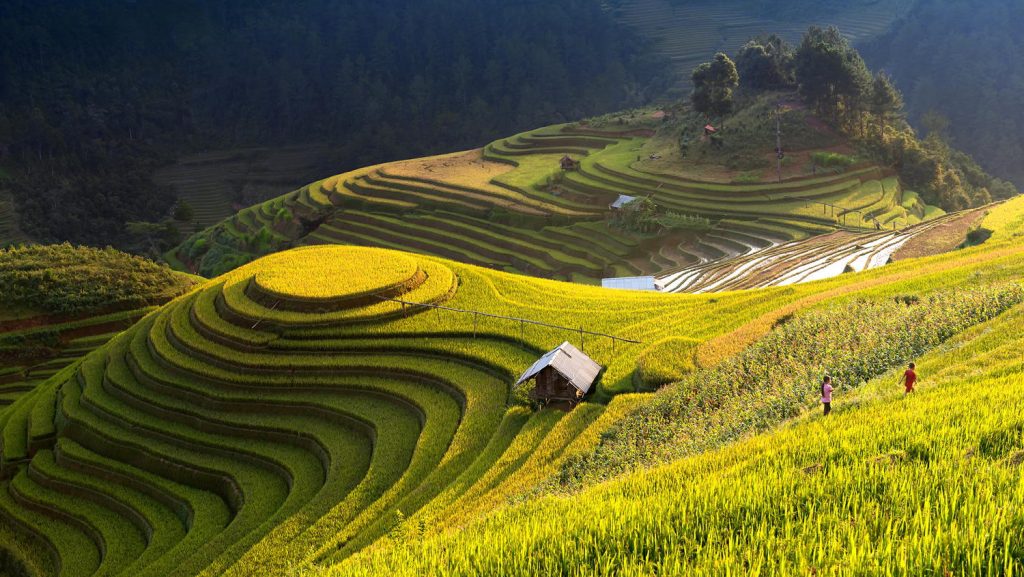
As rice farming extended to mountainous regions, these techniques had to adapt to steeper, less fertile terrain. Farmers ingeniously carved terraces into hillsides, employing stone-lined channels to divert water from mountain streams and create a controlled flow across each step. This not only maximized water use, but prevented soil erosion and retained nutrients. The terraces became a testament to human ingenuity, transforming inhospitable slopes into productive farmland through carefully orchestrated water management and soil conditioning that evolved over centuries.
The Science of Rice Cultivation
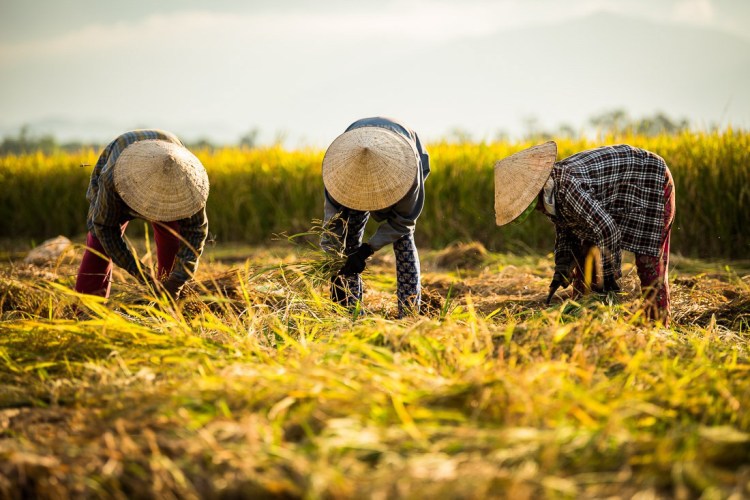
Sowing the Seeds: The process of growing rice in Vietnam begins with meticulous seed selection, usually sourced from heritage varieties adapted to specific regional conditions. Seeds are often soaked and sprouted before being planted in flooded paddies, a process that not only jumpstarts growth but also minimizes weed competition. In many rural areas, farmers still employ traditional hand-sowing methods, pushing seedlings into the nutrient-rich mud. The science here lies in the soil composition, where clay and silt help retain water, essential for rice’s semi-aquatic nature.
Cultivation and Maintenance: Growing rice demands a nuanced understanding of water management and pest control. Vietnam’s extensive system of dikes and canals demonstrates an early grasp of hydrodynamics. In the terraced fields of places like Sapa, water cascades down stone-built steps, allowing for controlled irrigation. This system reduces soil erosion and maximizes space, a testament to the symbiosis between human ingenuity and natural geography. As rice matures, farmers meticulously monitor water levels, ensuring that the paddies remain shallowly submerged. As pests and diseases present constant threats, modern farmers often blend organic and mechanical methods to protect their crops while preserving ecological balance.
Harvesting: The harvesting season is a blend of labor and festivity. Depending on the region, rice may be harvested by hand using sickles or with small machines in more modernized areas. The harvested rice is then threshed to separate grains from stalks, traditionally done by beating the bundles against wooden frames or using mechanical threshers. The grains are sun-dried before milling, a step that removes the husk and reveals the polished kernel ready for consumption.

Rice Varieties and their Many Faces
Vietnam is home to hundreds of rice varieties, each adapted to the climatic and geographical quirks of the region. Tấm Thơm or Jasmine rice, with its fragrant aroma, thrives in the humid, fertile Mekong Delta, where nutrient-rich alluvial soil contributes to its unique texture. In contrast, glutinous rice, or Nếp, grows in mountainous regions and is celebrated for its sticky quality, making it perfect for dishes like Bánh Chưng.
In the cooler climates of northern Vietnam, Red rice and other hardy varieties have evolved to survive in rocky, terraced farms. These grains often carry more complex flavors and higher nutritional content, evidence of their adaptation to harsher growing conditions.
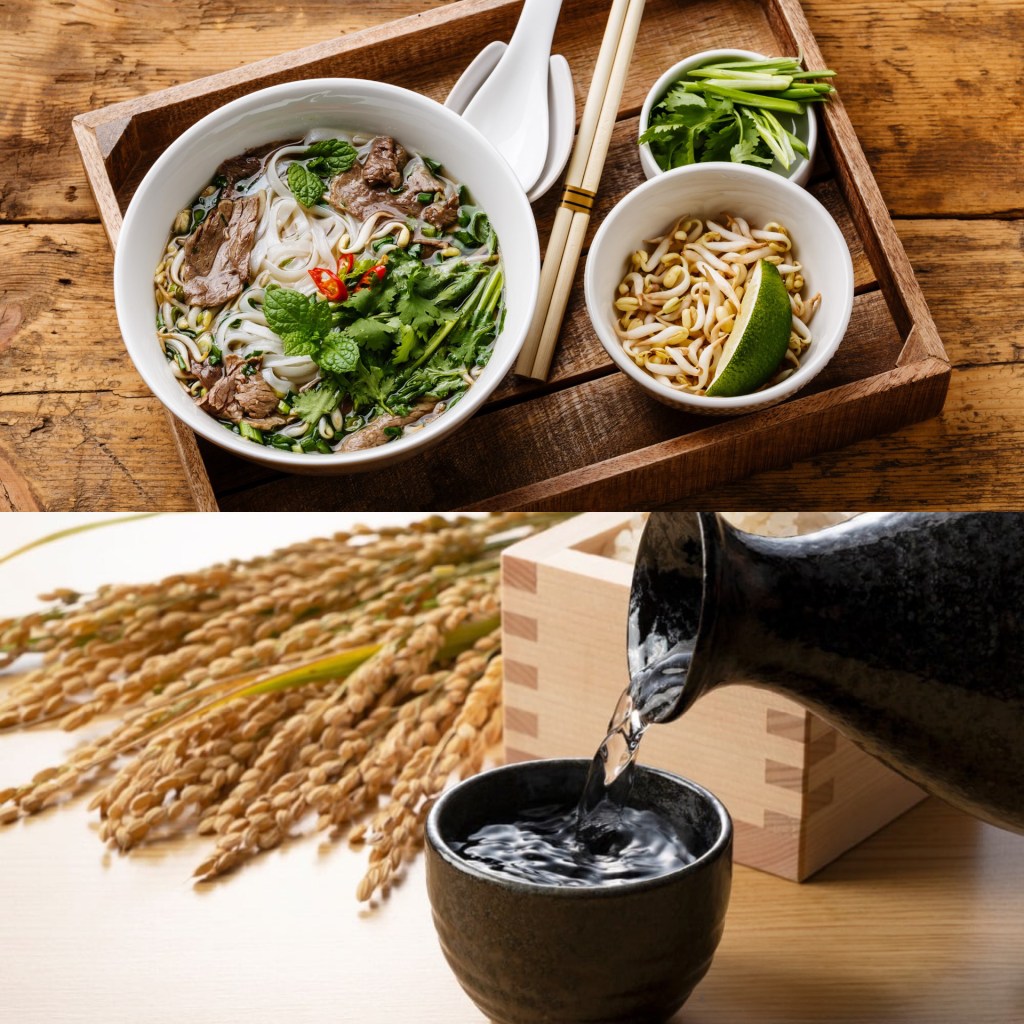
Rice in Vietnam is as versatile as it is vital. Culinary applications range from the iconic Phở noodles to the delicate rice papers used for Gỏi cuốn (spring rolls). Fermentation transforms rice into rượu (rice wine), which holds both culinary and ceremonial importance. Even rice husks and straw find use as animal fodder, roofing material, or fuel, demonstrating a culture where nothing is wasted.
Modern industries have adapted these practices into sustainable products like rice husk briquettes and biodegradable packaging, bringing ancient wisdom into contemporary environmental solutions.
The Social and Cultural Significance of Rice
Rice transcends the mundane to hold a ceremonial place in Vietnamese culture. During Tết, the Lunar New Year, families come together to make Bánh Chưng, an act rich with symbolism and unity. This dish serves not only as food but as an offering to ancestors, blending respect, tradition, and sustenance in one dish.
Markets that buzz with the exchange of rice underscore its economic role. As a staple and export commodity, rice supports millions, threading its way through both local and national economies. Village communities share in its planting and harvesting, reinforcing bonds through cooperative labor that is as much social as it is agricultural. The shift in recent decades to more mechanized farming and modern transport networks like trucks and motorbikes has expanded the reach of rice markets, balancing ancient practices with the conveniences of the present.
The journey of rice in Vietnam, from the legends of the Hung Kings to the meticulously maintained terraced fields, is one of evolution and endurance. It is a story of harmony between people and their environment, one where each grain of rice is a symbol of resilience, sustenance, and collective identity. To walk through Vietnam’s rice fields is not just to see agriculture—it is to witness the history, innovation, and spirit of a nation.
 Ha giang responsible tourism